
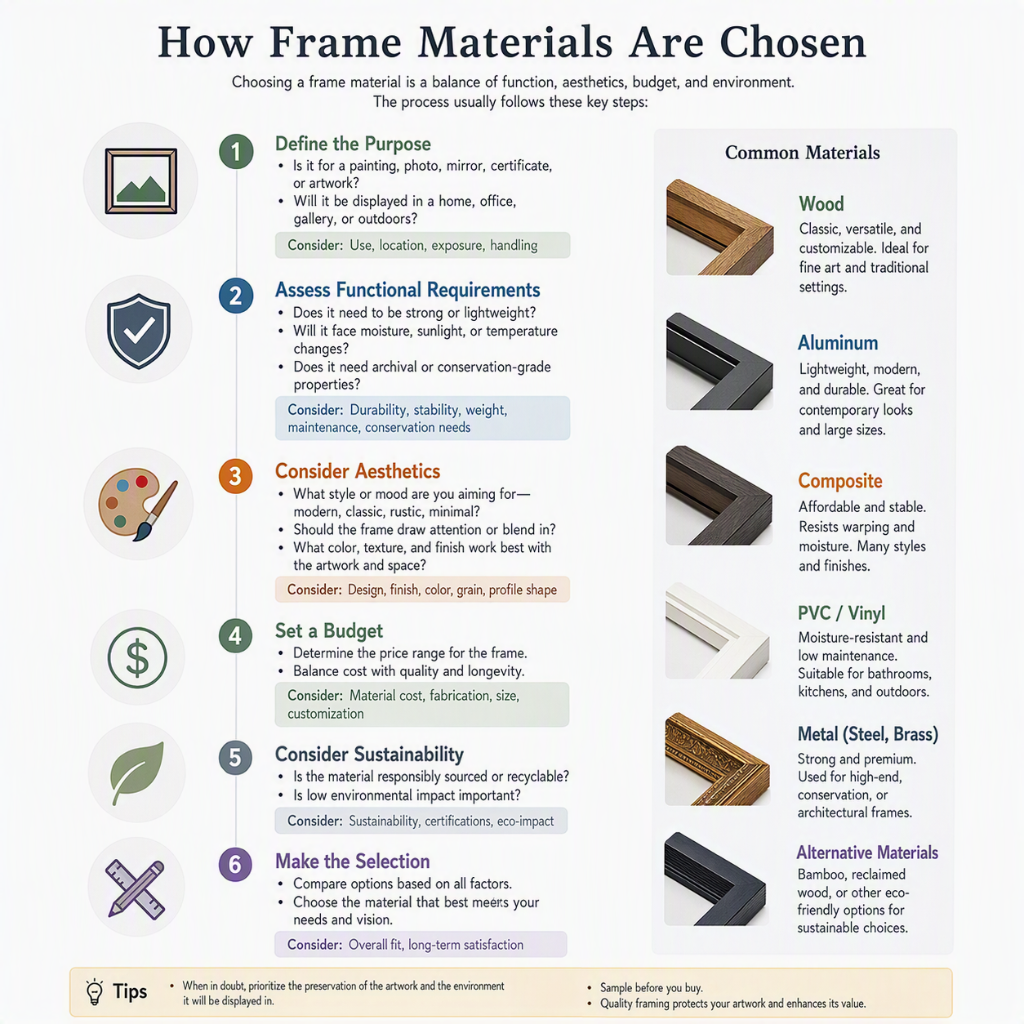
Frame material selection is a balance of comfort, durability, style, cost, and biocompatibility. Here’s how and why specific materials are chosen:🧬
1. Key Selection CriteriaFactor Why It MattersWeight Heavier frames cause nose bridge pressure, headaches, and slippingFlexibility Must bend without breaking for comfort and durabilityHypoallergenic Nickel allergies are common; skin contact mattersDurability Resistance to scratching, corrosion, impactAdjustability Some materials hold adjustments better than othersCost Balances performance with affordabilityStyle Color, finish, thickness, and design flexibilityPrescription Needs Strong lenses need sturdy frames; rimless need specific materials🔩
2. Common Frame MaterialsPlastic-Based· Cellulose Acetate: Most common plastic. Made from cotton fibers + acetic acid. Adjustable with heat, hypoallergenic, wide color range. Not as durable as some synthetics.· Cellulose Propionate: Lighter and more flexible than acetate. Resists aging and discoloration. Common in sports and children’s frames.· TR-90 (Nylon-Based): Extremely lightweight, flexible, memory-retentive. Ideal for sports and active wear. Cannot be adjusted with heat easily.· Optyl: Epoxy resin. Very lightweight, holds color well, hypoallergenic. Limited adjustability.· Polycarbonate: Impact-resistant. Often used in safety and sports frames.Metal-Based· Monel (Nickel-Silver): Classic metal alloy. Strong, adjustable, affordable. Can cause nickel allergies.· Stainless Steel: Corrosion-resistant, durable, relatively inexpensive. Heavier than titanium.· Titanium: Lightweight, strong, hypoallergenic, corrosion-resistant. Expensive. Three types: pure titanium, beta-titanium (more flexible), and titanium alloy.· Aluminum: Very light, but less durable. Often used in accents or rimless mounts.· Beryllium: Lightweight, strong, non-magnetic. Rare and expensive.· Gold-Filled / Gold-Plated: Aesthetic appeal. Gold-filled is more durable than plated.Combination & Specialty· Wood: Eco-friendly, unique look. Not adjustable, susceptible to moisture.· Horn / Bone: Traditional, luxury. Heavy, expensive, requires care.· Carbon Fiber: Ultra-light, strong, modern. Expensive.· 3D-Printed Resin: Fully customizable, rapid prototyping. Limited color and finish options.🎯
3. How the Choice Is MadeBy the Manufacturer:· Target Market: Kids → flexible, durable (TR-90, propionate). Luxury → titanium, gold, horn. Sports → TR-90, polycarbonate.· Cost Target: Budget → monel, acetate. Premium → titanium, carbon fiber.· Design Intent: Rimless → titanium or beta-titanium (needs strength). Thick frames → acetate (color, style).By the Optician/Patient:· Face Shape & Size: Larger faces need wider frames; material affects weight.· Skin Sensitivity: Nickel allergy → titanium or acetate.· Lifestyle: Active → TR-90, titanium. Office → acetate, stainless steel.· Prescription Strength: Strong prescriptions → smaller frames + high-index lenses + sturdy material (titanium).· Budget: Determines the material tier.⚖️
4. Trade-OffsMaterial Weight Durability Adjustability Cost Allergy RiskAcetate Medium Medium High Low LowTR-90 Very Low High Low Medium LowMonel Medium Medium High Low HighStainless Steel Medium High Medium Low LowTitanium Very Low Very High Low High Very LowCarbon Fiber Very Low Very High Very Low Very High Very Low🔬
5. Testing & Standards· Flex testing: Bending temples repeatedly to check fatigue.· Impact testing: Drop tests and ball impacts (especially for children/sports).· Corrosion testing: Salt spray for metal frames.· Skin compatibility: Nickel release testing (EU Nickel Directive).· Color fastness: Sweat and UV exposure tests.💡
Key InsightFrame material is chosen by answering three questions:
1. Who is wearing it? (Child, athlete, professional, elderly)2. What does it need to do? (Hold heavy lenses, survive impact, look luxurious)3. What can it cost? (Budget, mid-range, premium)The material determines comfort, lifespan, and style—but the fit is what makes it truly wearable.Would you like to know how frame shape is chosen for different face types, or how rimless frames are engineered?