
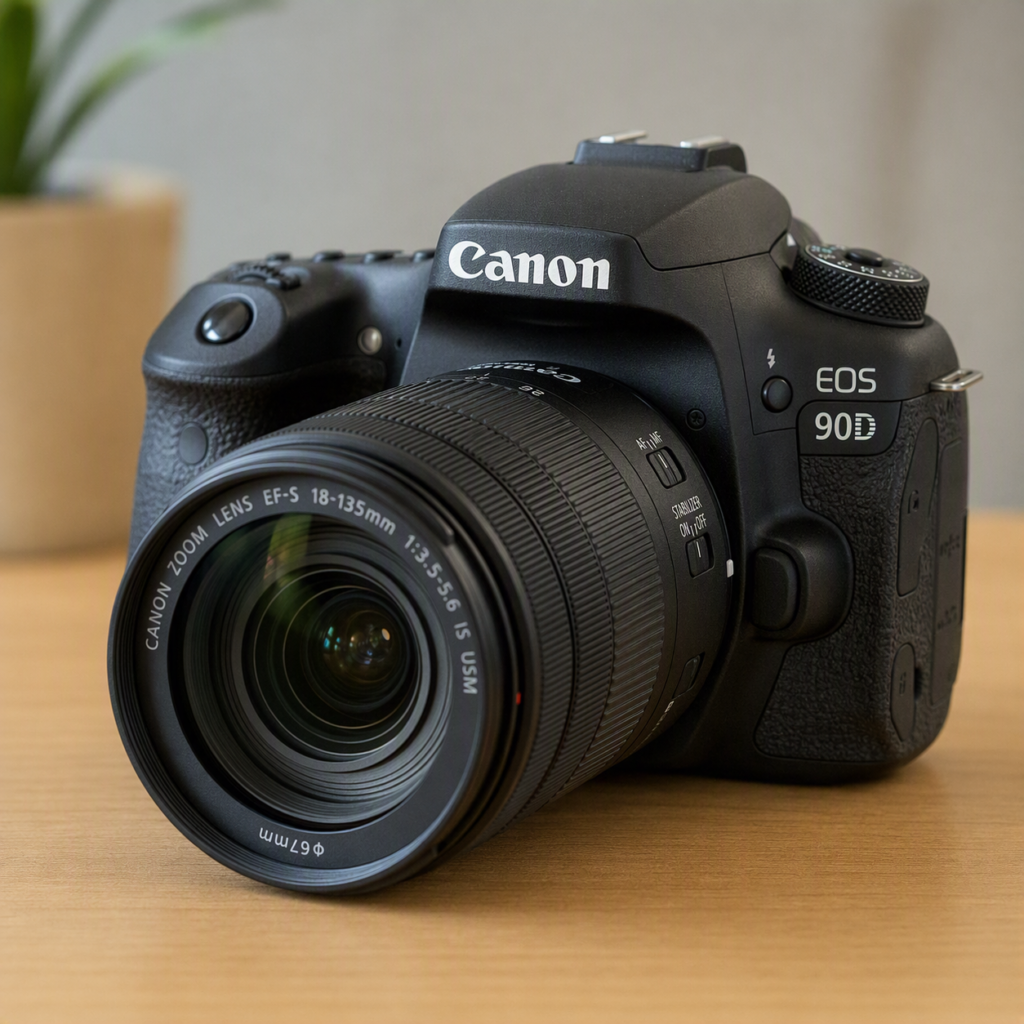
Here’s how a camera actually captures a photo, step by
Step:1. You press the shutter buttonThis triggers a sequence of events. In a digital camera, it’s all electronic; in a film camera, it’s mechanical.
2. The shutter opensThe shutter is like a curtain in front of the sensor/film. It opens for a precise amount of time (the shutter speed) — maybe 1/1000th of a second in bright light, or several seconds in the dark.
3. Light passes through the lensLight from the scene enters through the lens, which bends (refracts) the rays so they converge into a sharp image. The aperture (a hole inside the lens) controls how much light gets through.
4. Light hits the sensor (digital) or film (analog)Digital sensor:· The sensor is a grid of millions of tiny light-sensitive spots called photosites (or pixels).· Each photosite converts incoming photons into electrons — more light = more electrons. Most sensors have a Bayer filter on top: a mosaic of red, green, and blue filters, so each photosite only records one color. Green is most common because human eyes are most sensitive to green.· The sensor also has microlenses on each pixel to gather light more efficiently.Film:· Light hits silver halide crystals on the film, causing a chemical change.· This creates a “latent image” that becomes visible after developing.
5. The sensor reads out the signalOnce the shutter closes, the camera:· Measures the charge (electrons) at each photosite.· Converts that analog charge into a digital number using an analog-to-digital converter (ADC).· The result: raw pixel values (brightness per color channel).
6. Image processingThe camera’s processor turns raw data into a viewable image:· Demosaicing — fills in missing colors by interpolating from neighboring pixels (since each pixel only saw one color).· White balance — corrects color casts so whites look white.· Noise reduction — smooths out random sensor noise.· Sharpening & tone mapping — adjusts contrast, brightness, and sharpness.· Compression — saves as JPEG (lossy, smaller) or RAW/TIFF (uncompressed, more editing flexibility).
7. Saved to memoryThe final image is written to a memory card (SD, CFexpress, etc.) as a file.The whole chain in one line:Light → lens focuses it → aperture & shutter control it → sensor converts photons to electrons → ADC turns electrons into numbers → processor turns numbers into an image → saved to memory.Want me to go deeper on any part — like how autofocus works, how ISO fits in, or how RAW vs JPEG differs?